Key Takeaways
- ✓Rainbow-washing fails not because Pride marketing is risky, but because inconsistency is — superficial June-only campaigns now confirm consumer suspicion (a 2024 survey found 64% see corporate Pride as performative) and invite scrutiny of political donations and HR practices.
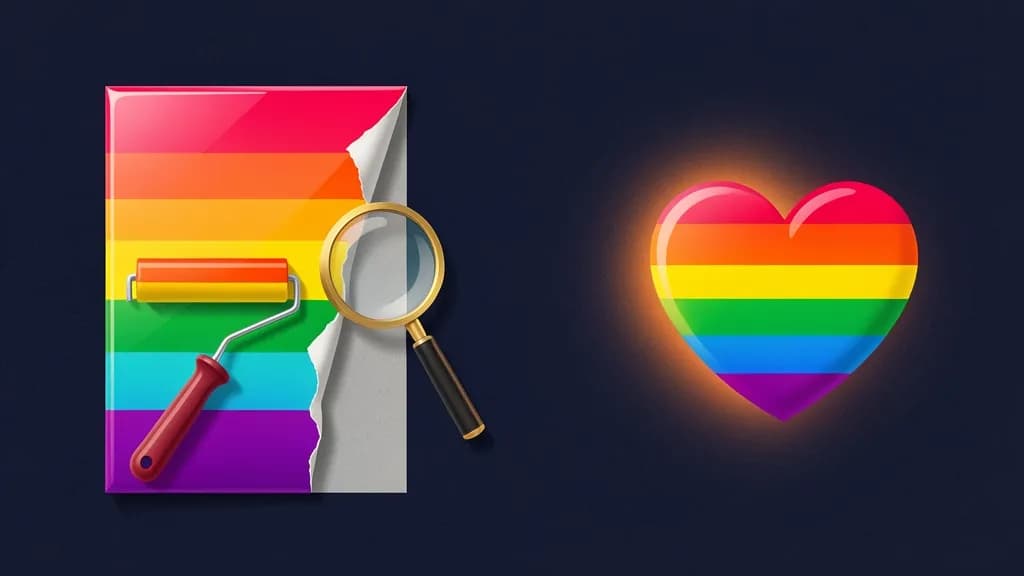
- ✓The "strip the rainbow" test is the fastest authenticity check: remove the rainbow graphic and ask what real commitment is left — a non-discrimination policy, same-sex partner benefits, sustained NGO funding, supplier-diversity spend, or paid LGBTQ+ co-creation.
- ✓Year-round support is the single most-cited marker of genuine allyship; in Thailand that means rooting in the real ecosystem (Bangkok Pride, Naruemit Pride, the WorldPride 2030 run-up) and using verifiable third-party signals like an inclusion benchmark or LGBTBE certification.
Every June, a familiar thing happens. Logos turn rainbow. Limited-edition packaging arrives in six colours. A heartfelt social post appears, racks up likes, and quietly disappears on 1 July. For a long time, that was enough.
It isn't anymore — and nowhere is the stakes-versus-shortcut gap clearer than in Thailand. In January 2025, Thailand became the first country in Southeast Asia (and the third in Asia, after Nepal and Taiwan) to legalise marriage equality. Bangkok Pride 2025 drew more than 300,000 people, Asia's largest Pride march to date, and the city is bidding to host WorldPride 2030. Thailand's LGBTQ+ economy is now valued at roughly USD 10.3 billion, and Central Pattana found that LGBTQ+ consumers spend around 40% more than the average shopper, with strong brand loyalty to match.
That loyalty is the prize. It's also the trap. The same audience that rewards genuine allies is exceptionally good at spotting fakes — and in Thailand, where the community is highly visible and the discourse is sophisticated, "rainbow washing" (the Thai marketing press calls it the era of จริงจังแต่ไม่จริงใจ — "serious-looking, but insincere") gets called out fast.
This guide explains what rainbow washing is, why it backfires, and how to put real substance behind the rainbow — with a practical test and concrete do's and don'ts for brands operating in Thailand.
What is rainbow-washing?
Rainbow-washing (also called pinkwashing or rainbow capitalism; in Thai, การล้างสีรุ้ง or simply Rainbow Washing) is the practice of using rainbow imagery in branding, advertising, merchandise, or social media to appear supportive of LGBTQ+ people — usually during Pride Month — without backing it up with meaningful, lasting action for LGBTQ+ rights, dignity, or inclusion.
The tell is the gap between the symbol and the substance. A rainbow logo is cheap. What it's supposed to signal — non-discrimination, fair treatment, real investment in the community — is not. Rainbow washing is what happens when a brand buys the signal and skips the substance.
It's worth distinguishing two closely related terms:
- Rainbow washing — symbolic support (rainbow products, recoloured logos) with no underlying commitment.
- Queerbaiting — defined by the Oxford English Dictionary as "the practice of trying to attract and capitalise on LGBTQ+ audiences or customers in a deceptive or superficial way." In marketing terms, it's hinting at queerness to bait the audience without ever delivering genuine representation.
Both share the same root problem: the brand wants the association with the community without the accountability to it.
A quick gut check used by Thai commentators: if you stripped the rainbow off the campaign, would there be anything left? If the answer is "no" — no policy, no partnership, no donation, no year-round behaviour — you're looking at rainbow washing.
Why it backfires (consumers can tell)
The instinct behind a Pride campaign is sound: participation matters, and most consumers still want to see it. But superficial participation now carries real downside, for three reasons.
1. The audience is skeptical by default — and the numbers are stark. A 2024 survey of over 4,000 US adults found that 64% believe corporate Pride efforts are mostly performative rather than a meaningful commitment to diversity. Separately, 42% of consumers said they had seen Pride campaigns they considered "performative," and 29% had seen ones they found "cringeworthy." When the default assumption is "this is probably fake," a thin campaign doesn't earn goodwill — it confirms suspicion.
2. Inauthenticity invites investigation — and the receipts hurt. Once a brand markets itself as an ally, people check. After the wave of corporate Pride campaigns, wary consumers surfaced evidence that some major brands flying rainbow flags had collectively donated over USD 10 million to politicians and organisations pushing anti-LGBTQ+ legislation. Nothing damages trust faster than a values claim contradicted by where the money actually goes.
3. Backlash now comes from both sides — and waffling pleases neither. The 2023 Bud Light and Target episodes in the US are the cautionary tale. Bud Light's partnership with a transgender influencer triggered a conservative boycott; one study estimated an ~18% drop in AB InBev sales, with Bud Light volumes down between 11% and 26% in the following month. Target reported its first quarterly sales decline in six years after backlash to its Pride merchandise (comparable sales down ~5.4%; e-commerce down ~10.5%). The deeper lesson wasn't "avoid Pride." It was that both brands made it worse by appearing to retreat under pressure — alienating conservative critics and the LGBTQ+ community, who saw companies abandon their stated principles the moment it got hard. Half-commitment is the worst position to be in.
The throughline: rainbow washing fails not because Pride marketing is risky, but because inconsistency is. A brand that means it and stands by it weathers pressure. A brand that's only borrowing the rainbow for a month gets exposed by the first hard question.
“Consumers can tell which brands genuinely support diversity and which are just following a trend.”
The test: 5 signs your Pride campaign is authentic
Before you ship anything in June, run the campaign through these five questions. They double as the criteria your audience is already using to judge you.
1. Does it pass the "strip the rainbow" test? Remove the rainbow graphic. Is there still a real commitment underneath — a policy, a partnership, a donation, a hiring practice? If the rainbow is the campaign, it's decoration, not allyship.
2. Is the money going somewhere that helps the community? Genuine campaigns are most credibly signalled by donations to LGBTQ+ organisations and public advocacy — exactly the indicators consumers rank highest. Levi's donates USD 100,000 annually to Outright International and builds collections with LGBTQ+ employees. Lush has run campaigns directing 75% of every sale to trans-led organisations. Converse has given nearly USD 3.4 million since 2015 and partners with 50+ LGBTQ+ creators. The pattern: real money, named recipients, repeated yearly.
3. Were LGBTQ+ people in the room — paid, credited, and leading? Authentic work is co-created, not just about the community. Absolut partners directly with LGBTQ+ artists, consultants, photographers, and employees. Lush's trans campaign was designed by trans creatives. If your Pride creative was made entirely by people outside the community, that's a flag — and an easy fix.
4. Do your internal practices match your external message? This is the one that separates allies from opportunists. Does your company have a written non-discrimination policy covering sexual orientation and gender identity? Same-sex partner benefits? Inclusive parental and gender-affirming leave? In Thailand, Sansiri offers same-sex marriage leave, gender-affirming surgery leave, and partner healthcare; LINE MAN Wongnai provides transgender surgery leave with partial salary continuation. Their June campaigns land because their HR handbooks already agree with them.
5. Will the commitment still be visible in November? Performative support is, by definition, seasonal. The single most-cited marker of authenticity in consumer research is year-round support — and changing your logo to rainbow only in June is, by the same research, one of the most commonly cited performative signals.
Scoring the test
If you can answer "yes" to all five, market with confidence. If you're answering "no" to three or more, the honest move is to fix the substance first and let the marketing follow.
Year-round, not just June
The most important word in authentic Pride marketing is continuity. Thai commentators frame it well: aim to create a movement, not just a moment.
Consumers have made this explicit. In recent research, year-round support is consistently the top-ranked indicator of genuine care — and a majority of even non-LGBTQ+ adults (around 55%) say brands should support the community all year, not only during Pride. When support appears every June and vanishes every July, the audience reads it as exactly what it is: a calendar event, not a value.
What year-round looks like in practice:
- Off-season visibility. Show up for the community when there's no marketing upside — supporting LGBTQ+ NGOs in Q1, sponsoring community programming in the autumn, keeping inclusive imagery in your "normal" advertising, not just the June edition.
- Consistency through pressure. The brands that earned trust in 2025 were the ones that didn't go quiet. As global political pressure rose — a Gravity Research survey found 39% of brand executives planned to reduce Pride marketing in 2025 (up from just 9% in 2024), and NYC Pride lost long-time sponsors including Mastercard, Nissan, Citi, PepsiCo and PwC — the brands that held their position stood out by contrast.
- Local rootedness. In Thailand, this means engaging with the actual ecosystem: Bangkok Pride and Naruemit Pride, the run-up to WorldPride 2030, and Thai LGBTQ+ organisations doing the work on the ground. Central Pattana's "Pride For All" reached its 6th consecutive year in 2025; Siam Piwat anchored a multi-partner festival with the TAT, the Bangkok Metropolitan Administration and UNDP. Longevity and real partners are the point.
The discipline is simple to state and hard to fake: do the thing in March, and the June campaign tells the truth.
How to put substance behind the rainbow
If a campaign passed the five-sign test in spirit but you're not yet sure you'd survive the audit, here's the substance to build — roughly in order of impact. This is the difference between a brand that says it's inclusive and one that can prove it.
1. Fix the policies first. Before any public campaign, get the internal foundation right: a written non-discrimination policy covering sexual orientation and gender identity; equal benefits for same-sex partners; inclusive parental leave; and, where relevant, gender-affirming leave and healthcare support. This matters more than it looks: Thai analysis notes that over 40% of younger employees still conceal their LGBTQ+ identity at work — a direct sign that a rainbow logo without an inclusive workplace is hollow. Policy is the substance the rest of the campaign rests on.
2. Hire and promote inclusively — and prove it. Inclusion you can demonstrate beats inclusion you assert. Track it, and let the data speak: representation across levels, pay equity, and whether LGBTQ+ employees feel safe being out. Independent frameworks (like the HRC Corporate Equality Index internationally) exist precisely so this can be measured rather than claimed. For brands serious about the Thai market, an external, third-party signal of inclusion — a credible inclusion benchmark or ranking — turns "trust us" into "here's the evidence."
3. Partner with LGBTQ+ NGOs — genuinely, and over time. Real partnership means sustained funding, co-created programming, and decision-making input from the community — not a one-off June cheque for a photo. The credibility comes from duration and depth: Electronic Arts' multi-year partnerships with advocacy groups; Converse's 6-year donation track record. In Thailand, that means building relationships with established LGBTQ+ organisations and letting them shape the work, year after year.
4. Invest in supplier diversity and LGBTQ+-owned businesses. One of the most concrete, least performative forms of support is economic: direct procurement spending toward LGBTQ+-owned suppliers. It moves real money into the community's businesses rather than just its imagery. Internationally, LGBTQ+ business certification (e.g., via the NGLCC) underpins this; the same logic applies in Thailand's pink economy, where supporting LGBTQ+-owned SMEs is both good ethics and good market-building ahead of WorldPride 2030.
5. Let LGBTQ+ creators lead the creative — and pay them. The fastest way to make Pride creative feel real is to have it made by the community, credited and compensated. Co-creation isn't a nice-to-have; it's the difference between speaking to an audience and speaking with it.
Do these, and the June campaign becomes the easy part — a visible expression of something that was already true the other eleven months.
Where PrideShow fits
PrideShow.org exists to make the "substance route" the easy route for brands in Thailand's pink economy. A few of the building blocks above map directly to what the platform offers:
- Proof, not claims. PrideShow's Inclusion Index and segment ranking benchmark companies on real LGBTQ+ inclusion signals — non-discrimination policies, supply-chain diversity, community investment, international ESG frameworks, and audit transparency — so a brand's commitment is something an audience (and a procurement team) can verify, not just take on faith.
- A credible third-party badge. LGBTBE (LGBTQ+ Business Enterprise) certification gives LGBTQ+-owned Thai businesses a recognised mark, and gives larger brands a verified path to supplier diversity and authentic partnership.
- A direct line to the community. PrideShow's directory of LGBTQ+ NGOs, SMEs, and creators makes it straightforward to build the year-round partnerships and co-created campaigns that authenticity actually requires — and to put real activation behind a brand's Pride presence rather than a recoloured logo.
The rainbow is the easy part. PrideShow is built for everything underneath it.
FAQ
What is rainbow washing?
Rainbow washing is using rainbow imagery in marketing, products, or social media to appear supportive of LGBTQ+ people — usually during Pride Month — without meaningful, lasting action behind it, such as inclusive policies, donations, or community partnership. The simplest test: if you remove the rainbow and nothing real is left, it's rainbow washing.
How do I avoid rainbow washing?
Put substance first. Fix internal policies (non-discrimination, equal benefits, inclusive leave), donate to or partner with LGBTQ+ organisations over time, involve and pay LGBTQ+ creators, support LGBTQ+-owned suppliers, and keep your support visible year-round — not just in June. Then market what's genuinely true.
Is Pride marketing still worth it in 2025–2026, given the backlash?
Yes — but only if it's authentic. Surveys still show a large share of consumers value brand participation in Pride, and the LGBTQ+ market in Thailand is worth roughly USD 10.3 billion with above-average spending power. The brands punished by backlash were generally those that were superficial or that retreated under pressure. Consistent, substantive support is the position that holds.
How do consumers tell the difference between authentic allyship and rainbow washing?
They look for year-round support, donations to LGBTQ+ causes, public advocacy, inclusive internal policies, and whether LGBTQ+ people were genuinely involved in the work. They also investigate — checking political donations and HR practices. Research consistently finds year-round support is the top signal of genuine care, while June-only logo changes are among the most-cited performative ones.
What does authentic Pride marketing look like in Thailand specifically?
It looks like brands whose internal practices match their external message — for example, Thai companies offering same-sex marriage leave, gender-affirming benefits, and partner healthcare — combined with long-term community engagement (multi-year Pride programming, partnerships with Bangkok Pride and Thai LGBTQ+ NGOs) and real investment ahead of WorldPride 2030, rather than a one-month rainbow refresh.
How can a brand prove its inclusion is real and not performative?
Use external, verifiable signals: a credible inclusion benchmark or ranking, recognised LGBTQ+ business certification (such as LGBTBE), documented supplier-diversity spend, and a track record of year-round NGO partnerships. Third-party proof turns "trust us" into evidence an audience and partners can check.
What's the difference between rainbow washing and queerbaiting?
Rainbow washing is symbolic support (rainbow products and logos) with no real commitment. Queerbaiting is hinting at LGBTQ+ representation to attract an audience without ever genuinely delivering it. Both exploit the association with the community without the accountability to it — and both are increasingly recognised and rejected by audiences.
Sources
- AlphaSense — Addressing Rainbow Washing in Corporate Messaging for Pride 2025
- PowerToFly — Rainbow washing vs. real LGBTQIA+ inclusion: a guide
- SurveyMonkey — Pride Month 2024 Statistics: Authentic Or Rainbow-Washing?
- Signal AI — Brands Go Quiet this Pride Month, Fearing Rainbow Washing
- Hustler Marketing — Pride Marketing Examples: 5 Great Campaigns
- BizBash — Brands Are Backing Out of This Year's Pride Events—But Some Are Stepping Up
- Omnisend — Pride Month Participation in 2026: What Does The Data Say?
- NPR — Target says backlash against LGBTQ+ Pride merchandise hurt sales
- Wikipedia — Bud Light boycott
- Wikipedia — Pinkwashing (LGBTQ)
- Techsauce — จริงจังแต่ไม่จริงใจ: Rainbow washing การตลาดสุดฮิตแห่งเดือน Pride Month
- Nikkei Asia — LGBTQ-friendly Thailand chases $4.7tn rainbow economy
- Pattaya Mail — Thailand's LGBTQ+ economy surges to USD 10.3 billion
- Bangkok Post — Bangkok Pride 2025 Set to Go Global
- Central Pattana — Pride For All for the 6th Consecutive Year
- Oxford English Dictionary — definition of queerbaiting