Key Takeaways
- ✓An affirming salon prices by hair length, time and complexity — not by gender — and uses your chosen name and pronouns without being asked twice.
- ✓Thailand has one of the world's most visible LGBTQ+ beauty workforces, but visibility isn't a guarantee — vet the specific salon, not just the country.
- ✓Read a salon's website and socials, message ahead with your exact request, and use the PrideShow directory to find verified queer-owned and inclusive businesses near you.
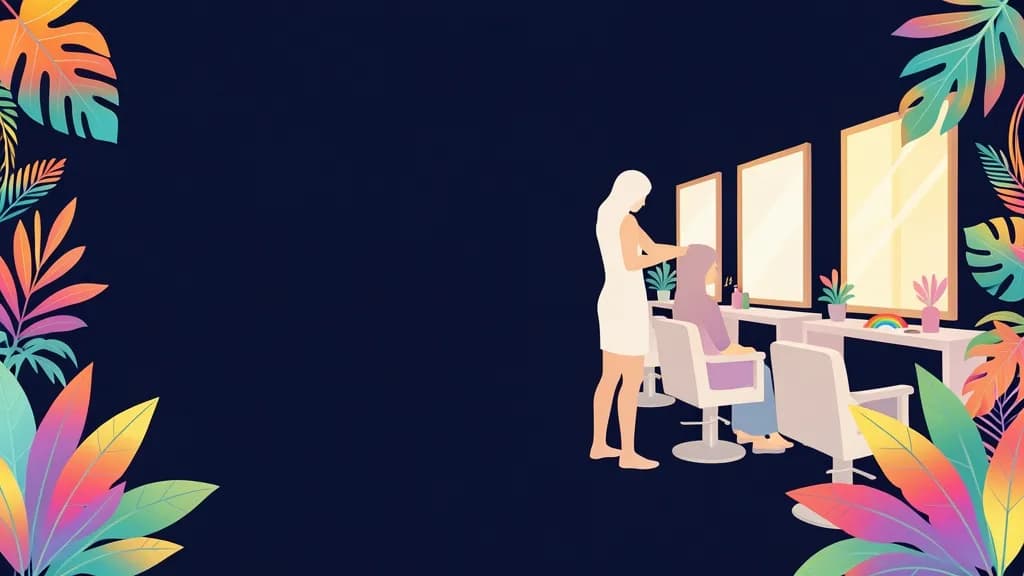
A haircut should feel like a reset, not a negotiation. But for a lot of LGBTQ+ people, walking into a salon means bracing for a small pile-up of indignities: being read by the wrong gender, getting steered toward a 'ladies' or 'gents' menu, having a stylist talk you out of the cut you actually want, or paying more because your hair landed on the 'women's' side of a price list. None of it is dramatic on its own. Together, it adds up to a service you tense through instead of enjoy.
Thailand is, on paper, one of the best places in the world to be LGBTQ+ and care about how you look. Trans women, gay men and queer artists are woven through the country's enormous beauty culture — they cut hair, run salons, and do the makeup you see on stage and on screen. Since the Marriage Equality Act took effect in January 2025 (2568), the legal landscape has shifted too. And yet 'Thailand is friendly' is not the same as 'this chair is safe.' This guide is about closing that gap: what an affirming beauty experience actually looks like, why the small stuff matters, and exactly how to find — and vet — the salon, barber or makeup artist who gets it right.
What "affirming" beauty service actually means
Affirming has a specific meaning here, and it's not the same as 'tolerant.' A tolerant salon doesn't make a scene. An affirming salon makes you feel like the easiest client of the day. The difference shows up in concrete, observable habits — not in a rainbow sticker alone.
- They use your chosen name and pronouns from the first hello — and keep using them, without a flicker, even when your ID or booking says something else.
- The service menu is built around the hair, not the person. You ask for a short cut, a fade, a colour, a set of nails — not a 'men's' or 'women's' version of it.
- Pricing follows length, time and complexity, so two people getting the same cut pay the same price regardless of gender.
- Nobody assumes what you want based on how they've sorted you. They ask, they listen, and they give you the cut you described — not the one they think 'suits your face' for your perceived gender.
- The consultation is a real conversation. A good stylist will ask how you want to feel walking out, not just how many centimetres to take off.
Affirming is a practice, not a vibe
A salon can feel stylish and modern and still misgender you twice before the cape goes on. Judge the place on what staff do — names, pronouns, menu language, questions asked — not on whether the playlist is good.
Why it matters: small indignities add up
If you've never had to think about it, the obvious question is: it's just a haircut — why does any of this matter? The answer is in the frequency. Beauty and grooming are maintenance, not one-offs. A cut every few weeks, a colour top-up, nails before an event, brows on a Saturday. Each visit is another roll of the dice on whether you'll be read correctly and treated like everyone else. When the odds are bad, people start avoiding the chair entirely — or grit their teeth through a service that's supposed to be a small joy.
93%
of LGBTQ+ people have been misgendered at a salon or barbershop
Figure cited by The Dresscode Project, the global alliance of gender-affirming salons — a reminder that the bad chair is the default, not the exception.
There's also a money tax hiding in the old system. Gendered price lists routinely charge more for a 'women's cut' than a 'men's cut' even when the work is identical — so someone whose hair sits on the 'feminine' side of the menu can pay double for the same fifteen minutes. Gender-neutral pricing isn't just a nicer label; it's a fairer bill. The whole point of grooming is to walk out feeling more like yourself. An affirming salon protects that feeling instead of charging you extra for it.
The Thai beauty scene & its queer talent
Thailand's beauty industry runs on queer and trans skill. Walk through any mall, market or soi and you'll find LGBTQ+ professionals — and especially trans women, often referred to as kathoey — working everywhere from neighbourhood salons to luxury counters: as hairstylists, colourists, makeup artists, nail technicians and salon owners. This isn't a niche. It's one of the most visible LGBTQ+ workforces anywhere on earth, and it means many Thai beauty pros bring lived, first-hand fluency in gender and self-presentation to the chair.
That heritage runs deep in makeup and stage artistry too — from the high-glamour world of Thai transgender pageants like Miss Tiffany's Universe to the drag and editorial scenes where queer makeup artists set the standard. Many of the country's most sought-after MUAs are LGBTQ+, and that expertise translates directly to the everyday: someone who has built a face for a pageant stage knows exactly how to do a soft, daytime look that reads the way you want it to.
Use the talent that's already there
When you find a stylist or MUA who is themselves LGBTQ+, you often skip the explaining-yourself step entirely. It's not a requirement for good service — plenty of allies are excellent — but for many people it's the fastest route to a chair where nothing needs translating.
A caveat worth holding, though: visibility is not the same as protection. Trans and queer Thais are highly present in beauty, yet still report discrimination at work and in daily life, and legal gender recognition for trans people remains unresolved even after marriage equality. So 'Thailand is welcoming' is true at the national level and unreliable at the individual-salon level. You still have to vet the specific place. That's what the rest of this guide is for.
Gender-neutral grooming: cuts, menus & pricing
The single clearest signal of an inclusive salon is how it writes its menu. Gender-neutral service design strips the 'men's' / 'women's' prefix off everything and names the service by what's actually being done. It's a small change in wording that quietly removes the moment where you get sorted into a box on the way in.
Practically, salons do this a few ways: by hair length ('short cut' / 'long cut'), by the work involved (scissor cut, clipper cut, fade, restyle), or by time booked (a price tied to a 30- or 60-minute slot). Whichever model they use, the effect is the same — your cut is priced on the hair in front of the stylist, not on an assumption about who you are. If a menu still reads 'Ladies' Cut ฿X / Men's Cut ฿Y,' that's not automatically a red flag, but it does mean you should ask how they price your specific request before you sit down.
| Service | Gendered menu | Gender-neutral menu | What to ask |
|---|---|---|---|
| Haircut | "Ladies' Cut" / "Men's Cut" | "Short Cut" / "Long Cut" or by time | "How do you price a cut like mine — by length or by time?" |
| Colour | Priced by gender | Priced by hair length & bowls of product | "Is colour priced the same for everyone?" |
| Styling / blow-dry | "Gents" vs "Ladies" rates | One styling rate by length | "Is there one price for a wash-and-style?" |
| Nails & brows | Often unisex already | Service-based, no gender split | "Can I book [service] regardless of how it's listed?" |
How to vet a salon before you book
You can learn most of what you need before you ever walk in. Vetting takes ten minutes and saves you a bad afternoon. Here's a reliable sequence.
- Read the website and Instagram first. Look for explicit language — 'all genders welcome,' 'gender-neutral pricing,' LGBTQ+ or Pride references — and a menu that names services by the work, not the gender.
- Scan the portfolio. Does their feed show a genuine range of people and cuts across the gender spectrum, or only one narrow look? A varied portfolio is a quiet promise that they can do your hair, not just hair like theirs.
- Check the reviews for your people. A line like 'made me feel so comfortable as a trans client' from a past customer is worth more than any badge the salon gives itself.
- Message ahead. Send your exact request — including any reference photos, your name and your pronouns — and read the reply. A warm, specific answer tells you almost everything; a vague or odd one tells you the rest.
- Look for the networks. Some inclusive salons join alliances like The Dresscode Project (a gender-affirming salon directory) or Strands for Trans (whose members display a barber-pole sticker in the Transgender Pride flag colours). On PrideShow, look for verified queer-owned and LGBTQ+-friendly listings.
- Trust the first five minutes. When you arrive, state your name and pronouns plainly. How staff handle that — easily and warmly, or with a stumble — is your final, most honest data point.
Green flags vs. things to watch
Green: gender-neutral menu, your name and pronouns used without correction, a stylist who asks how you want to feel. Watch: being funnelled to a gendered menu, an assumed cut you didn't ask for, or any 'we don't really do that here' when you describe what you want. One stumble can be nerves; a pattern is your cue to leave.
For trans & non-binary clients
A few extras make trans and non-binary salon visits go smoother — and they're about removing friction, not lowering your standards. You deserve a great cut and an easy chair; these just stack the odds.
- Lead with the feeling, then the details. 'I want to read more masculine / feminine / androgynous' gives a good stylist a direction; the centimetres are secondary.
- Bring references. Two or three saved photos close the gap between what you mean and what they hear, and they sidestep any gendered assumption about 'what suits you.'
- Say your name and pronouns up front, once, clearly. You shouldn't have to — but doing it early sets the terms of the appointment on your side.
- For makeup, name the goal. 'Soft daytime, reads feminine, nothing heavy' or 'sharp and editorial for an event' helps an MUA build the right face the first time.
- It's allowed to leave. If the first five minutes feel wrong, you can reschedule elsewhere. A deposit is cheaper than an hour of being misread.
- When something works, lock it in. A stylist who nailed it and remembered your pronouns is worth rebooking and recommending — that's how the good chairs get busy and the rest get the message.
Queer-owned beauty businesses
Choosing a queer-owned salon, barber or makeup artist does two things at once. You get service from people who tend to understand the assignment without a briefing — and your baht goes back into the Pink Economy, keeping LGBTQ+ founders, stylists and small teams in business. In a beauty market this big, where your money lands is a quiet form of community support.
The hard part has always been finding them reliably — queer-owned spots don't always advertise it on the storefront. That's exactly the gap PrideShow's directory is built to close: a verified place to discover LGBTQ+-owned and LGBTQ+-friendly beauty and grooming businesses across Thailand, so you're not relying on word-of-mouth or a lucky walk-in. Filter for what you need, check the listing, and book a chair where you can fully relax.
Browse PrideShow's verified directory of inclusive and queer-owned businesses across Thailand.
Find LGBTQ+-friendly beauty near youFrequently asked questions
What makes a salon "LGBTQ+-friendly" rather than just tolerant?
Observable behaviour. A friendly salon uses your chosen name and pronouns without being corrected twice, names its services by the work rather than by gender, prices the same cut the same for everyone, and asks what you want instead of assuming. Tolerance is the absence of a problem; friendliness is the presence of care. Judge the staff's habits, not the décor or a single sticker.
What is gender-neutral pricing and why should I look for it?
It's pricing based on hair length, time or complexity instead of 'men's' versus 'women's.' A short cut costs the same whoever sits in the chair. It matters because gendered price lists often charge more for the 'women's' version of an identical service — so neutral pricing is both more affirming and, frequently, a fairer bill.
Is Thailand safe for LGBTQ+ people getting beauty services?
Broadly, Thailand is one of the most LGBTQ+-visible beauty cultures in the world, and many stylists and makeup artists are themselves queer or trans. But national openness doesn't guarantee any single salon, and trans Thais still report everyday discrimination. Treat 'Thailand is welcoming' as a good starting point, then vet the specific place you're booking.
How do I ask about pronouns or my chosen name when booking?
Keep it plain and matter-of-fact. When you message or arrive, say something like: 'Hi, my name is ___ and my pronouns are ___ — I'd like a [your request].' You shouldn't have to do this, but stating it early and clearly sets the appointment on your terms, and how the salon responds is useful information in itself.
Where can I find queer-owned salons and makeup artists in Thailand?
Start with PrideShow's directory, which lists verified LGBTQ+-owned and LGBTQ+-friendly businesses across the country, then cross-check a place's own website, Instagram portfolio and reviews. Inclusive-salon networks like The Dresscode Project and Strands for Trans can also point you to affirming chairs.
Discover queer-owned salons, studios and makeup artists building Thailand's Pink Economy.
Explore LGBTQ+-owned small businessesSources
- The Dresscode Project — global alliance of gender-affirming salons; 93% misgendering figure and member directory: dresscodeproject.com
- Strands for Trans — network of trans-friendly barbershops and salons (barber-pole sticker in Transgender Pride colours): strandsfortrans.com
- Behindthechair / Modern Salon / Square — how gender-neutral salon pricing works (services named and priced by length, time and complexity, not gender)
- Wikipedia, "LGBTQ culture in Thailand" — visibility of kathoey and LGBTQ+ professionals across beauty, salons and entertainment
- OHCHR Bangkok & United Nations in Thailand — Marriage Equality Act enacted, taking effect 23 January 2025
- UNDP Thailand, "Marriage Equality: A Huge Step, But the Journey Continues" — legal gender recognition for trans people still pending after marriage equality